
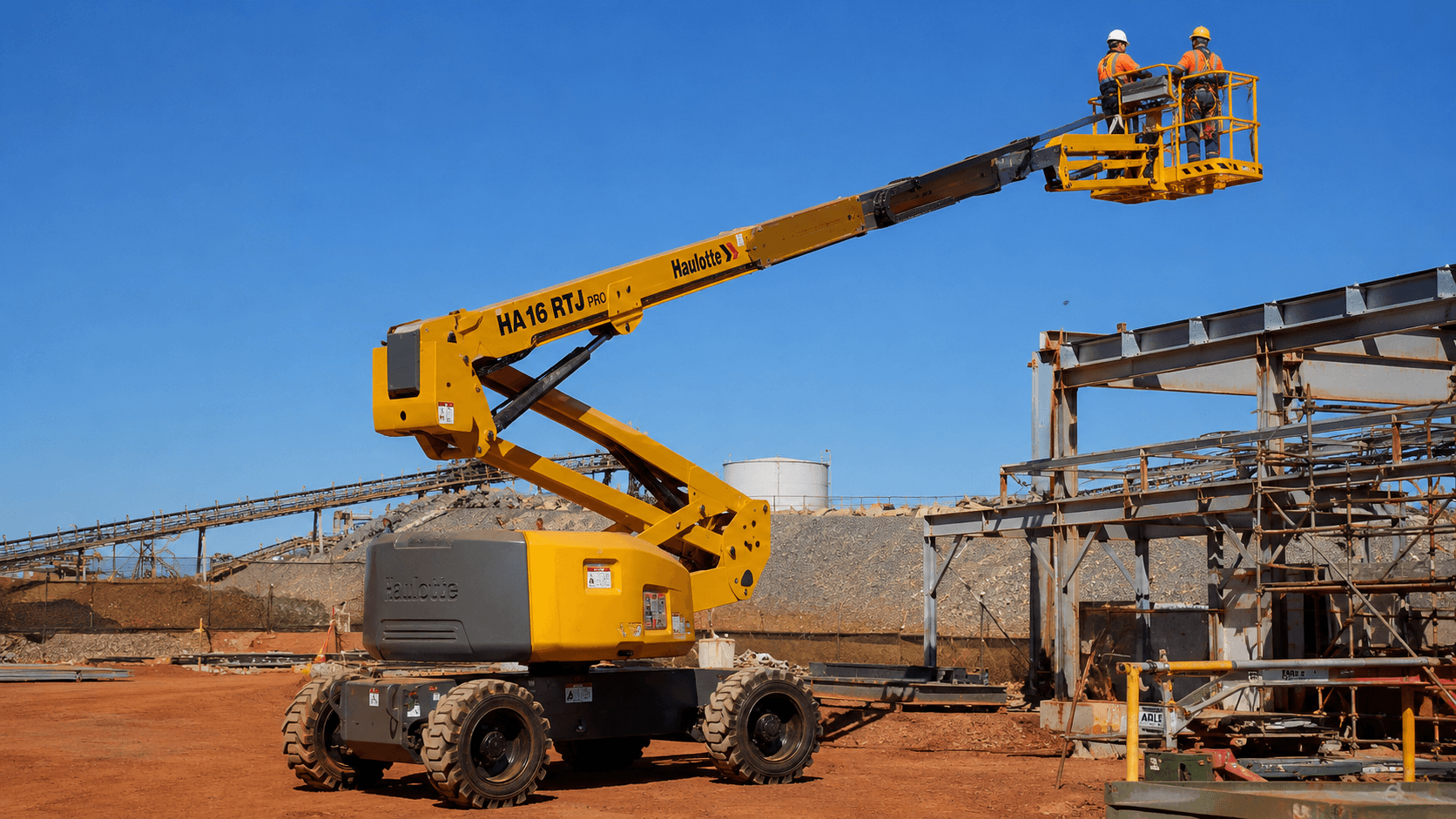
Access equipment looks straightforward until the machine arrives and will not fit through the gate, reach over the obstruction, drive on the surface or operate in the wind. Elevated work platforms are safe and efficient when matched to the job. When guessed, they waste time and create risk.
Scissor lifts
Scissor lifts go mostly straight up and down. Electric slab scissors are common inside warehouses, shopping centres and workshops where floors are level and load-rated. Rough terrain scissors use diesel or hybrid power, larger tyres and outriggers for outdoor work. They provide a stable platform and good deck space but do not reach over obstacles.
Boom lifts and knuckle booms
Straight boom lifts provide horizontal reach and height for open areas. Knuckle booms, also called articulated booms, are better when you need to reach up and over pipework, plant, awnings or building edges. Push-around EWPs suit small indoor maintenance jobs where power, weight and access width are tight.
Height and licensing
Always distinguish platform height from working height. Working height is usually around two metres above platform height, assuming a person standing on the deck. In Australia, boom-type EWPs with a boom length of 11 metres or more require a High Risk Work Licence class WP. Scissor lifts do not use the same licence trigger, but operators still need instruction, competence and site authorisation.
Ground and environment
Slab machines do not belong in red dirt, soft sand or uneven laydown areas. Rough terrain machines are built for those conditions, but they still need ground assessment. Indoors, check floor loading, turning circle, tyre marking and access width. Outdoors, wind limits are critical; an EWP that is fine in calm weather may be out of service on an exposed coastal or Pilbara site.
Mine spec and compliance
Mine spec EWPs may need isolators, extinguishers, harness points, flashing lights, alarms, radios and current inspection records. Ask for the logbook and confirm whether the machine has been accepted on similar sites.
Before you hire
- Measure working height, outreach, access width and ground conditions.
- Confirm indoor or outdoor use, wind exposure and floor strength.
- Ask who is operating it and whether licences or VOCs are current.
- Check delivery access, charging or refuelling, and emergency lowering procedure.
A ten minute site measure will save a lot of mucking around after delivery.