
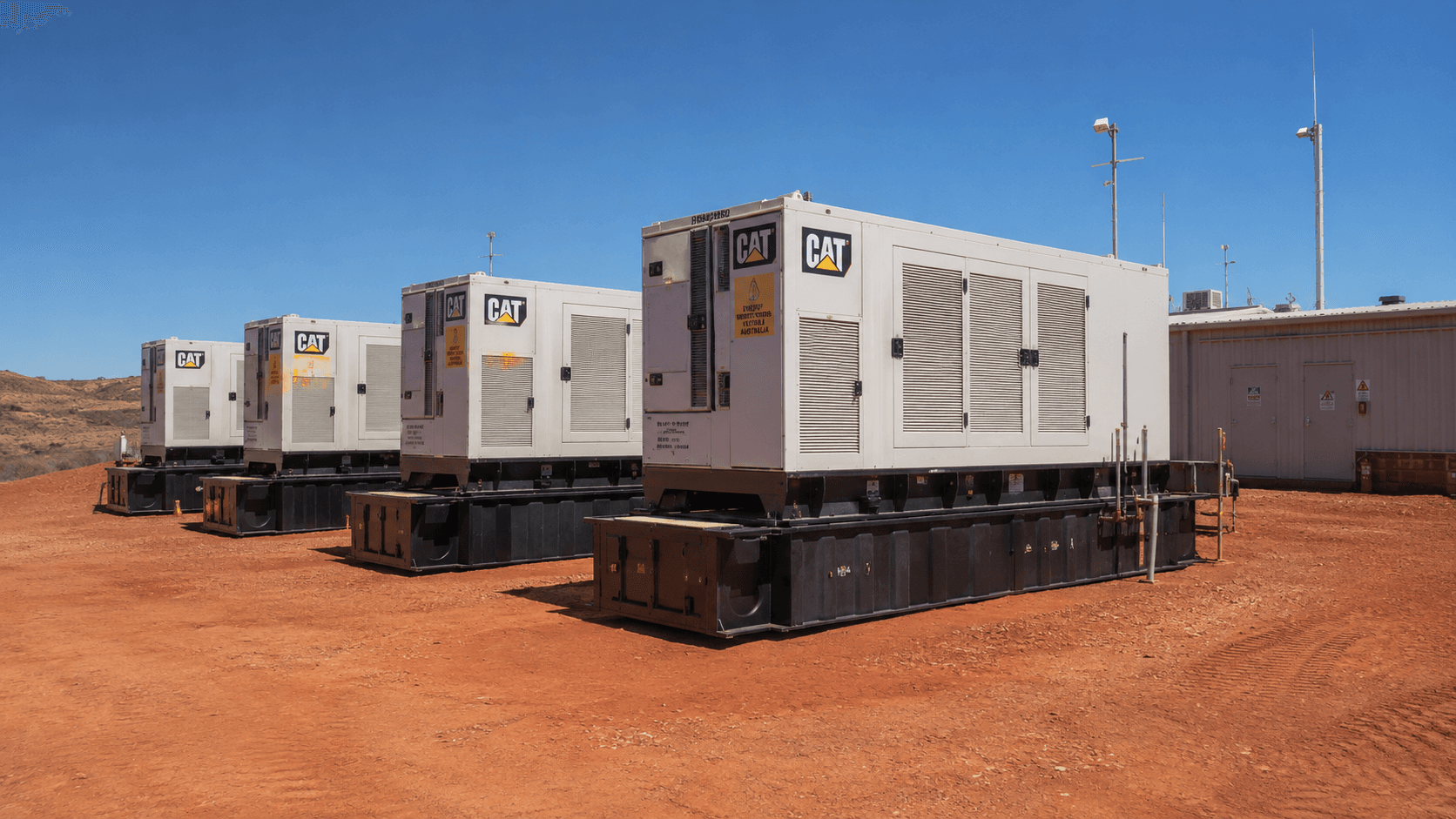
Power is one of the first things a remote site needs and one of the fastest things to cause grief when it is wrong. In town, a generator failure might mean a quick swap from a nearby yard. On a remote WA job, it can stop pumps, lights, crib rooms, communications, tooling and accommodation in one hit.
Sizing the generator
Start with the running load and the starting load. Electric motors, pumps, welders, compressors and site sheds all draw differently. A rough rule is to list every item, note its kW or amps, allow for starting current, then add headroom. Do not size a generator at 100 percent load for long periods; it shortens life and increases failure risk.
Underloading can also be a problem with diesel sets, especially when they idle along lightly loaded for long periods. A good supplier will ask what is connected, whether loads are staged and whether the site runs 24 hours.
Diesel, gas and hybrid options
Diesel remains the default for remote construction and mining because fuel supply is established and the machines are robust. Gas can make sense where supply exists, but it is less common for temporary remote work. Solar hybrid generators are growing in WA, especially where environmental requirements, noise, fuel use or community impacts matter. They are not magic, but for lighting, camps and steady small loads they can be good value.
Fuel logistics
Fuel is the job inside the job. Ask about bunded tanks, bowsers, delivery schedules, fuel burn at expected load, spill kits and who is responsible for contamination. In the Kimberley wet season or on pastoral tracks, fuel delivery may be harder than the generator hire itself.
Wet hire, dry hire and redundancy
Dry hire suits sites with electricians, fitters and people who can manage daily checks. Wet hire or managed hire can include setup, servicing, fuel management and monitoring. For critical loads, budget for a backup generator or at least a rapid replacement plan. Remote sites often run N+1 redundancy because one failure can cost more than the backup hire.
Light towers and distribution
Sometimes it is better to hire self-contained light towers instead of running everything from a main generator. For bigger sites, ask about distribution boards, leads, tagging, earthing, cable protection and electrician sign-off. Good lighting is a safety control, not a nice extra.
Typical rates and questions
Small portable sets may be relatively cheap by the day; larger silenced diesel sets, hybrid units and mine spec packages can become substantial weekly costs. Ask for kVA rating, fuel burn, noise level, service interval, emergency support, mine spec status, delivery costs and whether commissioning is included.