
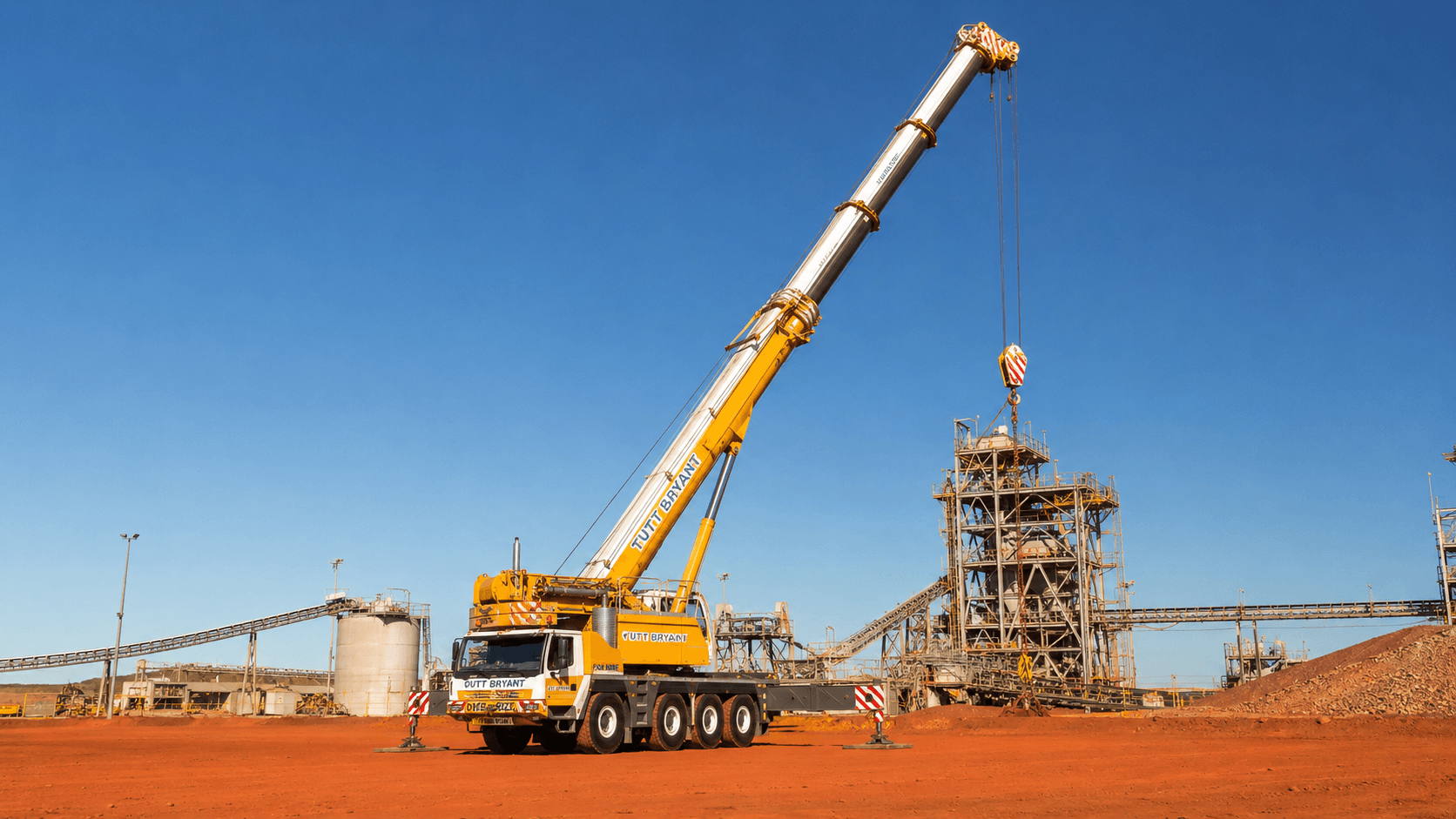
Crane hire is not like hiring a small roller or site shed. The machine, crew, lift plan, ground conditions, permits and exclusion zones all have to line up before the crane rolls through the gate. Done properly, it is routine. Done casually, it is one of the highest-risk activities on a project.
Common crane types
Mobile cranes cover a wide range of all-terrain and truck-mounted cranes used across construction, mining and shutdown work. Franna cranes, or pick and carry cranes, are the workhorse of Australian construction because they can lift and travel with a load within their rated limits. Tower cranes suit high-rise and long-duration building projects. Crawler cranes are used where heavy capacity and ground pressure distribution matter.
Capacity is only part of the story
A 25 tonne crane does not lift 25 tonnes at every radius. Capacity depends on boom length, working radius, counterweight, ground setup and configuration. The same load can be easy at three metres and impossible at 15 metres. Give the crane supplier the load weight, dimensions, pickup point, set-down point and radius, not just a rough description.
Permits, lift studies and people
Many lifts need a lift study, permit to work, traffic management, WorkSafe notification or engineering input. Rigging and dogging requirements must be clear. Dogmen, riggers and crane operators need the right High Risk Work Licences, and the site needs someone competent controlling the lift.
Site assessment
Ground bearing is critical. Outriggers on poor fill, soft shoulders or service trenches can become dangerous very quickly. Check underground services, overhead powerlines, access width, turning space, slope, exclusion zones and whether road closures are needed. In regional towns, local council permits can still apply even when the job feels informal.
Wet hire is the norm
Crane hire is almost always wet hire because clients rarely supply their own crane operator. The supplier will usually provide the operator and may provide riggers, dogmen, lift planning and transport. Confirm what is included. A bare crane and operator is different from a complete lifting crew.
Remote site crane hire
Remote lifts add mobilisation, accommodation, fuel, permits and weather risk. A crane from Perth to the Pilbara is not a casual move. Book early, provide drawings, and be realistic about standby if other trades delay the lift. Paying standby is annoying; remobilising a crane is usually worse.