
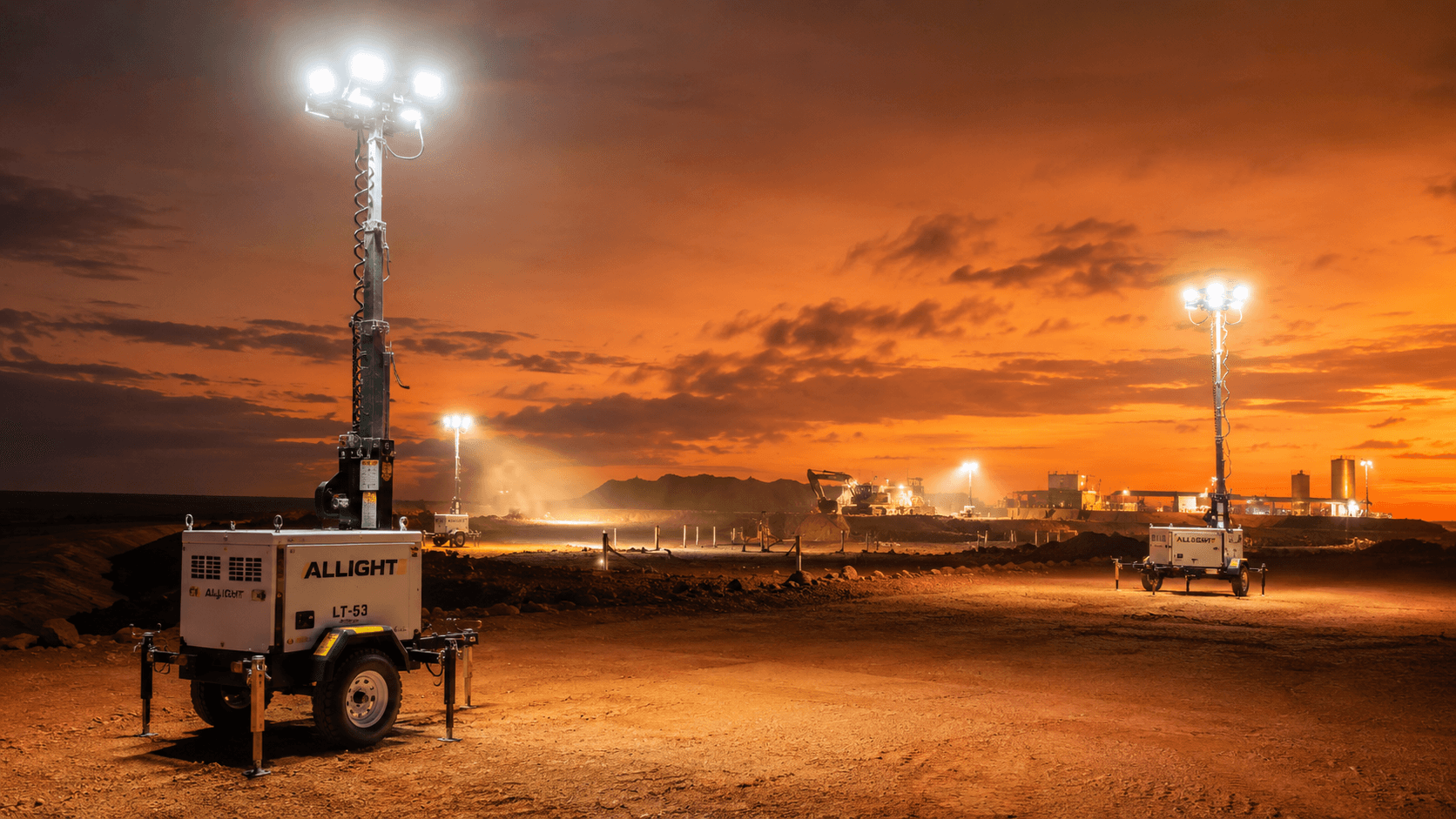
Good lighting is a safety requirement, not a nice extra for night shift. Poor light makes operators miss edges, spotters lose sightlines, truck drivers misread windrows and crews take longer to do basic tasks. On remote jobs, light tower hire needs the same planning as any other critical site service.
Diesel, battery and solar towers
Diesel light towers are still the common choice for construction, mining and roadworks because they are familiar, robust and easy to refuel. Battery and solar hybrid towers are becoming more common where noise, fuel use, emissions or environmental approvals matter. They work well for steady lighting loads, crib areas, laydowns and some traffic management setups, provided sunlight and battery capacity suit the roster.
How many do you need?
There is no single answer. It depends on the work area, height, beam spread, shadows, glare, traffic movement and required lux levels. A tower lighting a laydown is different from lighting a trench, crusher maintenance area or road closure. Ask the supplier about coverage and whether they can help with a basic lighting plan.
Fuel and runtime
Runtime matters on remote sites. If the tower needs refuelling every shift, someone has to own that task. Ask for fuel burn, tank size, bunding, spill controls and whether refuelling is included. In hot Pilbara conditions, keep an eye on cooling and dust around radiators and air filters.
Site placement
Place towers to reduce glare into operators' eyes and avoid creating harsh shadows behind plant. Consider wind, slope, exclusion zones, overhead power, traffic paths and whether the mast can be lowered safely. In roadwork, lighting must support traffic management plans, not confuse drivers.
Mine spec and compliance
Mine sites may require isolators, extinguishers, wheel chocks, reflective markings, emergency stops, spill kits and inspection records. Ask for documentation before mobilisation. A light tower rejected at the gate is a small machine causing a big delay.
What to ask
- LED or metal halide, mast height and coverage.
- Fuel burn, runtime and refuelling responsibility.
- Solar or hybrid availability for low-noise areas.
- Mine spec status, delivery cost and breakdown support.
Lighting is one of the simplest ways to make a site safer and more productive. Treat it properly.