
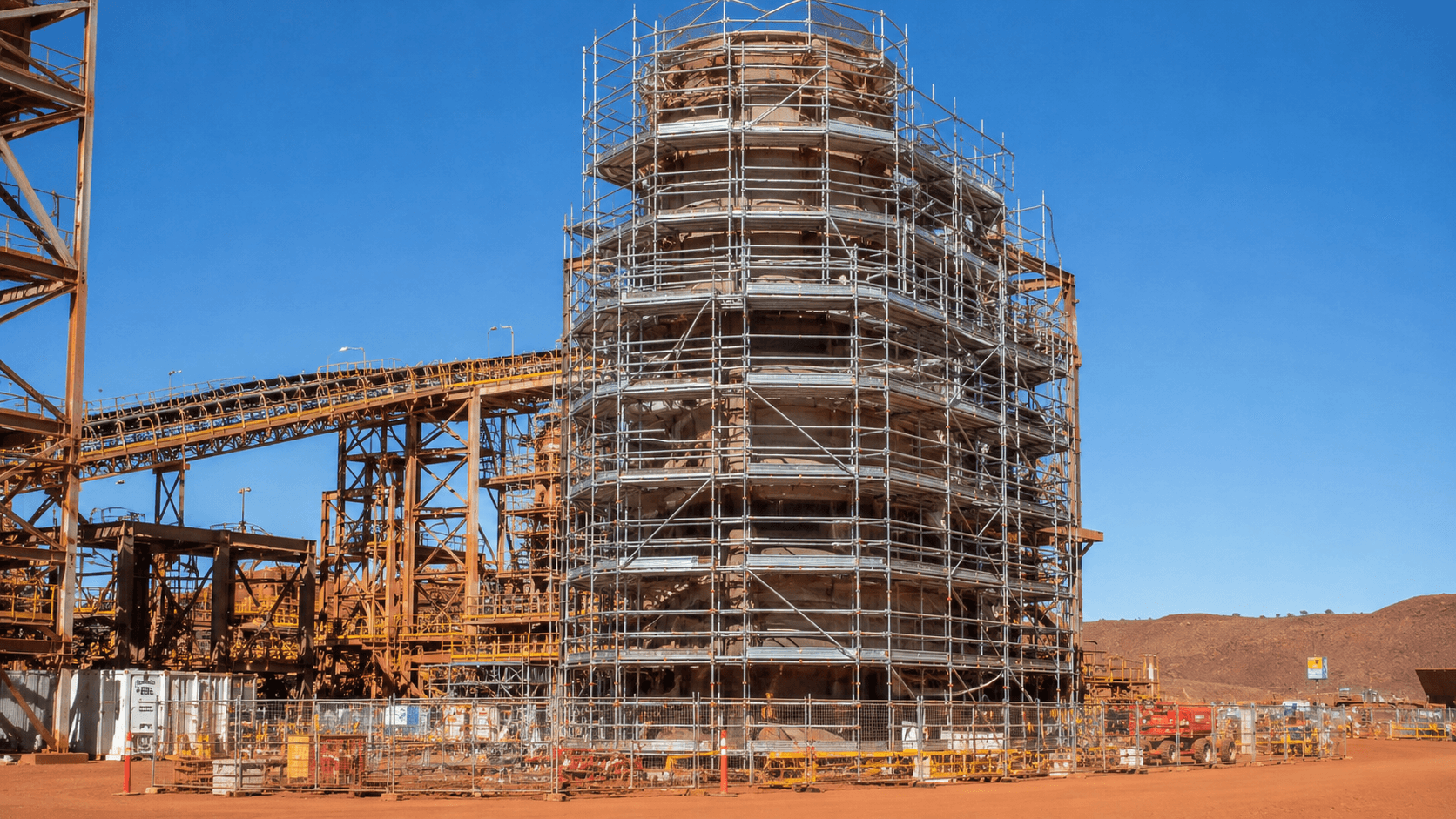
Scaffold is easy to underestimate because it does not dig, lift or generate power. But it is a primary safety control. If it is poorly designed, badly erected or left uninspected, every worker using it inherits that risk. Good scaffold hire is about access, load, sequence and certification, not just panels and planks.
Types of scaffold
Modular scaffold is common on commercial, industrial and mining work because it is quick to erect and suits repeatable bays. Tube and coupler scaffold is more flexible for awkward shapes, heritage work, process plants and irregular structures. Mobile scaffold towers suit light maintenance, but they have strict height, wheel, bracing and ground requirements.
What drives cost
Hire cost depends on height, length, loading class, duration, access, design complexity, transport and labour. On many jobs, erection and dismantling cost more than the weekly hire. Remote mobilisation, accommodation and travel can be significant, especially in the Pilbara, Kimberley or Goldfields.
Licensing and inspection
Scaffolding work above specified risk thresholds requires licensed scaffolders. The scaffold must be handed over as complete, inspected at required intervals, and rechecked after alteration, impact or severe weather. Do not let other trades modify scaffold to make their task easier. That shortcut can create a serious breach.
Design and loading
Tell the supplier what the scaffold is for. Painting, facade work, pipe installation and materials loading all have different demands. If pallets, bricks, formwork or mechanical gear will sit on the deck, the loading class must suit. Edge protection, stair access, debris mesh, containment sheeting and exclusion zones should be specified early.
Mine sites and industrial plants
Mine spec scaffold suppliers understand permits, isolations, shutdown windows, dropped object controls and site inductions. For work around conveyors, tanks or processing plants, the supplier's ability to plan around operations is as important as the gear itself.
Before you book
- Provide drawings, photos, dimensions and the work method.
- Confirm loading class, access points and handover process.
- Ask about licensed labour, inspection records and insurance.
- Clarify who can alter the scaffold and how variations are approved.
Scaffold is not the place to chase the cheapest vague quote. Get a supplier who asks detailed questions.